
Dear Chuck,
I recently learned that my college freshman is gambling on sports games. He said it is not a big deal, that it is a lot of fun, and that he knows when to quit. Can you write something that I can share with him to address this from a Biblical perspective?
Concerned About My Son Gambling
Dear Concerned About My Son Gambling,
Sports gambling is experiencing explosive growth and is certainly not limited to teenagers. The data is alarming. Just recently, I was able to speak to an old friend who told me the heartbreaking story of his son’s journey to gambling addiction and ultimate victory. More on that to come. Let’s look at the data.
Explosive Growth
“Today, about 22% of Americans—and 48% of men ages 18–49—report having at least one online sportsbook account.” The American Psychiatric Association estimates that more than a quarter of Americans gamble online every day.
“Before 2018, legal bets on sports totaled less than $5 billion. In just six years, it skyrocketed to $150 billion and sparked a 33 percent spike in gambling addiction,” according to a disturbing article released recently by The Hill.
Ministry Watch reports: “So, with one in three Americans betting on sports, downloading multiple gambling apps seems to be the latest obsession for men in the U.S., with 52% of men ages 18-49 signed up for accounts with an online sports book, such as DraftKings, Caesars, FanDuel, or BetMGM.”
Governments Want the Revenue
With the 2018 legalization, states expected increased tax revenue but failed to consider the financial ramifications for families. The industry is growing rapidly. Addiction may be one of the contributing factors.
Many people don’t realize the financial burden of a gambling addiction until it’s too late. There are serious consequences, whether winning or losing. Besides the loss of money, there’s the loss of time and the reward of advancing your career or spending time with your children. Money is gambled away that could have been given to the Kingdom of God, saved, or invested for the future.

Be Direct with Your Son
Begin by highlighting the risks:
How It Starts and Grows
Many of our young people grow up in homes where gambling is practiced. Smartphones, social media, and peers increase their exposure to online gambling. Teens are especially vulnerable because their brains are still developing. They may lack impulse control and the ability for wise decision-making.
Some platforms run ads 24/7 to lure young people. Those who play games online may be exposed to digital ads for betting sites. Big wins are emphasized, and risks are downplayed, making betting tempting for teens. Those who manage their own bank accounts can quickly lose large sums.
Intervention from a Loved One
This is where wise parents, grandparents, teachers, pastors, or other influencers can make a difference! Here’s a helpful resource.
Parents can lead by addressing the topic at home. Respectfully ask what they know about gambling. If you’re confronted with TV, radio, or online ads, seize the opportunity to start a conversation. Stop what you’re doing and ask if they understand the point of the ad. Do they think the promises are probable or realistic? Ask what would happen if they risked real money. This question might reveal that they already do. If so, keep the door open through respectful discussion and your concern for their well-being.
Watch for these warning signs:
Pray and Take Action
If you sense these warning signs are present, pray and ask the Lord to give you a clear plan to have the conversation or actions needed to help your son. It may be that someone other than yourself is better equipped to have a discussion with them. The goal will be to get them to recognize they are in danger and commit to stop or seek help.
Sports betting may be on the rise, but in the long run, the house always wins. Always!
My friend watched his son graduate at the top of his class, begin a professional career in finance and accounting, and steadily develop erratic behavior that led him into an alcohol addiction, the loss of his job, the loss of all of his money, and utter despair. It was through the witness of a close family member that he confessed to his gambling and alcohol addiction and turned his heart back to Christ. He moved in with his parents as a young adult and rebuilt his career and life.
As Christians, we must not put our trust in money, even money earned through investing. It will lead to our demise. “For the love of money is a root of all kinds of evil. Some people, eager for money, have wandered from the faith and pierced themselves with many griefs.”
“Wealth gained hastily will dwindle,
but whoever gathers little by little will increase it.”
Proverbs 13:11 ESV
Whether you’ve been part of Crown for years or are just discovering us, we’d love for you to be part of our 50th Anniversary Celebration. For five decades, Crown has taught biblical stewardship principles that transform finances, strengthen families, and deepen faith. Lives have been changed. Communities have been empowered. Purpose has been rediscovered. And we’re just getting started!
This article was originally published on The Christian Post on June 5, 2026.
Dear Chuck,
I’m tired of watching my sisters bum off my grandmother’s generosity. They ask her for money for everything, even though they are married and should be supporting themselves. It looks like financial abuse to me. I have kept silent, but I really hope you can give me some tips to be ready to speak up.
Protecting My Grandmother from Financial Abuse
Dear Protecting My Grandmother from Financial Abuse,
As with every question, I always wish I had more context, such as ages, financial condition, motivations for the requests, etc. However, there are some principles that I think will be helpful to you and to anyone who has witnessed a similar situation where an elder appears to be financially abused.
While this does not fall into the category of fraud, it is particularly hard to watch a family member’s generosity being misused. It is a difficult situation for you to be in. Let’s look at some principles and then determine whom you should speak to and how to address this without condemning your sisters.
What the Bible Says
It is good that your grandmother wants to help. The Bible encourages generosity. Proverbs 11:25 says, “A generous person will prosper; whoever refreshes others will be refreshed.” God honors a willing and open heart, but discernment must be exercised. Scripture calls us to give and care for others while wisely stewarding resources. That involves setting healthy boundaries.
Generosity was never meant to enable dependency when someone is capable of taking on responsibility for themselves. The Apostle Paul addresses this issue directly in 2 Thessalonians 3:10: “The one who is unwilling to work shall not eat.” This is not meant to be harsh. It clarifies the difference between helping someone in genuine need and supporting someone who avoids responsibility. When generosity becomes enabling, it can harm the person you think you are helping.
You do not indicate whether this generosity is harming your grandmother’s finances. Regardless, God entrusts us to manage what He provides. Luke 16:10 reminds us that faithfulness in small things matters, including time, energy, and finances. When a relationship is draining resources in an unhealthy way, it is time to reevaluate whether you are actually helping.
Boundaries are not unloving. They are often necessary to truly help in the spirit of love. Galatians 6:2 says to “carry each other’s burdens.” Then, in verse 5, it says each person should “carry their own load.” Both are true depending on the specific circumstances. We help to relieve a burden but not to carry what someone else is responsible for long-term.

How You Can Help
Practically, this may mean having an honest, respectful conversation with your grandmother. Keep your sisters out of it, and speak to her about your concerns for her well-being.
First, express your concern for her. Try to determine if she is giving out of love or out of guilt, pressure, or fear of conflict. Second Corinthians 9:7 reminds us that giving should be done willingly, not reluctantly or under compulsion. Ask if she would like you to help her set limits on what she can and cannot continue to provide. My guess is she may be giving to many others who ask and not just your sisters.
Demonstrate how she can lovingly decline the requests while also offering guidance, accountability, or temporary assistance with clear expectations. Present options that the church, city, or county offers in the way of financial help for family members if cutting them off entirely seems inappropriate.
Finally, help her trust God with the outcome. She is not the ultimate provider for your sisters. God is. Help her understand that setting boundaries is not abandoning someone. It is trusting God to work in that person’s life, even in the discomfort and change. It is commonly called “tough love,” but it is actually just expecting others to grow up and take responsibility for their finances.
Teach Them A Better Way
The solution isn’t just protecting your grandmother’s finances; it is also a matter of helping those who keep asking her for money with building skills, confidence, and accountability. With the right support and a willingness to grow, most people find dignity in living free of the handouts of others.
If your sisters are truly struggling with their finances, offer to help them learn to manage their finances. Some people genuinely struggle to grow up and live independently, and it’s rarely caused by just one issue. More often, it’s a combination of things that causes financial problems: bad habits or addictions, entitlement, incorrect mindset, lack of direction, or mental health issues.
Many in today’s culture face financial instability. Housing and medical costs, debt, and inconsistent income can make financial independence feel out of reach. A person who does not know how to budget, save, or manage money well, even with a steady income, can struggle to make ends meet.
Some people are held back because they lack life skills. Managing bills, buying groceries, preparing meals, maintaining a home, or handling unexpected expenses are not always taught. Without those skills, independence can feel overwhelming. When someone lacks confidence or self-discipline, they may struggle to move forward. Years of bad habits like overspending, procrastination, or avoiding accountability only reinforce that cycle.
Scripture speaks to both responsibility and growth. Proverbs consistently highlights diligence and planning, while Galatians 6:5 reminds us that each person is responsible for their own load.
I hope the conversation with your grandmother goes well and you can be a catalyst for change to help your sisters become better stewards of their finances as well.
Crown has many biblically based, practical, and empowering courses and studies that can help your family find financial freedom. Learn how to be a faithful financial steward of the resources God provides.
This article was originally published on The Christian Post on May 29, 2026.
Dear Chuck,
I’m grateful that my parents prepared for aging in place and for assisted living, if necessary.
Some of my friends’ parents have not, and the financial pressure within those families has been difficult to watch. What tips can you offer people so they can avoid this financial drain in their senior years?
Getting Ready for Getting Old
Dear Getting Ready for Getting Old,
Your parents will be remembered for their consideration and wisdom. Hopefully, your question can inspire many other families to “set their house in order” (Isaiah 38:1) to be ready for the financial burden of aging and leaving our earthly home.
A Serious Financial Shock
It is a fact that many of America’s elderly cannot cover their overhead. The National Council on Aging reports that 45% of older adult households do not have the income needed to cover basic living costs based on cost-of-living data from the Elder Index. 80% are unable to cover a shock like widowhood, serious illness, or long-term care. In addition, Investopedia gathered data showing that three in ten Americans in their 50s have no retirement account or pension. This is a sad reality.
While the parents of your friends may appear as if they have nothing, it is possible they have lived sacrificially to prepare. Possibly, they have life insurance and invest in assets that children are unaware of. That’s why it’s important to discuss the matter if possible. Unfortunately, not all families have the luxury of transparency due to relationship challenges, mental health, or other issues with children and/or blended-family situations.
Getting Ready for the Inevitable
Preparing financially for one’s senior years is one of the most important forms of stewardship. It’s not just about having enough money. It’s about creating stability, preserving dignity, and living with purpose. The key is to begin now, long before becoming senior citizens. There is no escaping it. Should the Lord will it, we will become senior citizens ourselves one day! Start now by taking the following steps:
The earlier you begin, the better. Time is a powerful factor in financial preparation because of compounding. Consistently saving and investing over decades allows even small contributions to grow significantly. Even if starting late, intentional planning can make a meaningful difference.

A Simple Plan to Follow
A foundational step is to build and maintain retirement savings. Contributing regularly to 401(k) accounts or IRAs provides long-term growth and potential tax advantages. If employers offer a match, take full advantage of that benefit. It’s one of the most effective ways to accelerate savings.
Reduce and eliminate debt. Entering retirement with large financial obligations can limit flexibility and increase stress. Aim to free up income so that resources will support needs rather than cover past decisions.
Plan for healthcare costs. Medical expenses typically increase with age and can become one of the largest financial burdens in retirement. Understanding insurance options, setting aside savings, and considering long-term care needs are all part of wise preparation.
Create a sustainable income strategy. This includes Social Security, retirement accounts, and any additional income sources. A clear plan helps ensure that your money lasts.
Fund an emergency account. Unexpected expenses still arise in old age. Accessible savings prevents the need to rely on debt or having to withdraw from long-term investments at an inopportune time.
Make lifestyle decisions. Living below your means before and during retirement creates margin and reduces financial pressure. It may also open the door to greater generosity and the freedom to act on what God lays on your heart.
Seek wise counsel. Financial advisors, trusted mentors, and knowledgeable friends provide perspective and help avoid costly mistakes. Proverbs reminds us that wise plans succeed with many counselors.
If possible, plan to continue working or pursuing meaningful activity to provide both income and purpose. View retirement as a season of contribution in new ways.
Anchor your preparation with trust. Financial planning is essential, but it does not provide ultimate security. God is the Provider. Preparation is an act of stewardship that must be paired with faith in God, who numbers our days.
The Bible teaches that the way we handle money now impacts our future both here and into eternity. We need not prepare out of fear but out of faithful stewardship. Here are financial actions and attitudes that are supported by Scripture:
Financial preparation for senior years is more than accumulating resources. It’s about building a life characterized by wisdom, discipline, and purpose. When that season comes, you are not defined by financial stress but by a life that is filled with peace, generosity, and impact. Hopefully, younger family members can serve you without the stress of wondering how to pay for your care.
More Resources
Financial Literacy Declines in Older Adults
Gen X Facing a Retirement Crisis
Preparing for Retirement Involves More than Finances
Crown offers many biblically based, practical, and empowering courses and studies to help families find freedom with their finances. Learn how to be a faithful financial steward of the resources God provides.
This article was originally published on The Christian Post on May 22, 2026.
Dear Chuck,
My grandfather is giving me $5,000 for my college graduation that he wants me to invest. He says too many people wait until they think they can afford to invest, but starting young is crucial. He is giving me freedom to pick stocks or funds but expects to see proof.
Young Investor
Dear Young Investor,
Congratulations on your graduation! You have a wise grandfather!
Most people wait until they think they can afford to invest before they begin. Your grandfather knows that the earlier you begin investing, the longer your money has to grow.
Quick Guidelines for Investors
I want to share some Biblical principles and expert insights to help you become a better investor; however, let me frame my comments with some important perspective first:

What the Bible Says
God’s Word offers distinct principles for guidance in growing and managing resources.
Lessons from Warren Buffett
For years, I have read books and articles by one of the greatest investors of our time, Warren Buffett. I recommend that you read books by Benjamin Graham and Warren Buffett to learn from their years of investing expertise. Here are some key takeaways:
Extra Insights from the Experts
Be Prudent and Diligent
Investing is anchored in wise, patient, and purpose-driven stewardship—growing what we’ve been given while keeping our trust anchored in God, not money. Investing places our money at risk of loss. Be prepared for losses and to ride out dips in the economy. The longer you are able to remain invested, the better the likely performance. No one can avoid losses; no one can time the market’s fluctuations. Just be diligent.
“Lazy hands make for poverty, but diligent hands bring wealth.”
Proverbs 10:4 (NIV)
“The plans of the diligent lead surely to abundance, but everyone who is hasty comes only to poverty.”
Proverbs 21:5 (ESV)
“In all toil there is profit, but mere talk tends only to poverty.”
Proverbs 14:23 (ESV)
Do you want more tools and tips on financial stewardship? Are you interested in receiving encouraging ministry updates from around the world? Sign up to receive the Crown Newsletter emails by using the form on the homepage at Crown.org.
This article was originally published in The Christian Post on May 15, 2026.
Dear Chuck,
I maxed out our credit card for some unexpected home repairs, including a new HVAC. The interest rate is ridiculously high since I did not pay it off last month. I’m considering using a HELOC to pay off the credit card. Is that a good idea?
Worried About My Credit Card Balance
Dear Worried About My Credit Card Balance,
My first reaction whenever someone tells me that they are planning to use debt to pay off debt is to say, “You are tap-dancing on hot coals.” Moving short-term debt to long-term debt to lower the interest rate or the monthly payments may be necessary for the relief you seek, but at some point, you can get really burned.
It would be helpful to have a full conversation to understand your overall picture. I don’t want to presume anything about your circumstances, but the next questions I would ask are:
A Better Way
If credit card payments are becoming difficult or you want to lower the interest you’re paying each month, here are several steps and options that may help:

HELOCs – The Good and the Bad
Only consider a home equity line of credit (HELOC) if you have a significant amount of home equity, are disciplined in your spending, and have a secure source of income. Be sure you can check all the boxes I just listed.
While helpful in lowering borrowing costs, they come with risks. They have variable rates and are secured by your home. Missed payments can endanger home ownership. This kind of loan requires time, paperwork, possibly an appraisal, an origination fee, and closing costs from 2–5% of the loan amount. Other fees may be charged for a credit report, a notary, and a title search. These can easily cost several thousand dollars, depending on the desired line of credit. If you decide to apply for one, make sure you have a repayment plan in place.
The amount you can borrow is determined by your credit score, debt, income, mortgage payment history, and home equity. If you sell your home before paying off the HELOC, proceeds from the sale will be used to close out the debt. Only go with a legitimate lender. Research customer reviews, ratings, and any regulatory action or lawsuits against the company. Applications received online or in the mail that you did not request are most likely scams.
If you itemize deductions on your tax return, any interest from a HELOC that is used to buy, build, or substantially improve your primary residence or a qualified second residence is tax-deductible up to certain limits. Clear documentation is required: renovation contracts, itemized receipts, invoices, and bank statements showing payments to contractors that prove the use of funds.
Pros
Cons
On April 27th, Bankrate reported that interest rates on a $30,000 HELOC dropped to 7.81%. That is the lowest level seen in two years among their national survey of lenders.
The diagram below can help you consider all of the options and make a wise choice on how to pay off this credit card debt.
| OPTION | RATE RANGE | HOME AT RISK? | CREDIT REQUIRED | BEST FOR |
| HELOC | 7–10% | Yes | 680+ | High equity homeowners, large balances |
| Home Equity Loan | 7.5–10.5% | Yes | 680+ | Those wanting fixed-rate certainty |
| Balance Transfer Card | 0% intro, 18%+ after | No | 700+ | Small balances, 12–18 month payoff |
| Personal Loan | 10–18% | No | 650+ | No home equity, moderate balances |
| 401(k) Loan | Prime + 1% | No | N/A | Employed borrowers, small amounts |
| Debt Management Plan | No new debt | No | Any | Struggling with minimums, needs structure |
Financial Slave
The Bible never declares that debt is sin. However, Proverbs 22:7 says, “The borrower is servant to the lender.” I don’t want you trapped in a never-ending cycle, juggling the weight and stress of your debt. Choose the best path forward, and seek to avoid any new consumer debt in the future.
Extra Reading
Consider reaching out to Christian Credit Counselors. They are a trusted partner of Crown and can help you create a debt management plan tailored to your current needs—putting you on a path toward financial freedom.
This article was originally published on The Christian Post on May 8, 2026.
Dear Chuck,
I know all the steps to financial health. I’m just experiencing extreme frustration because of such slow progress. We were making headway until the price of gasoline jumped; now everything seems to be falling apart. I’m tempted to just trash the family budget completely and do the best I can month to month.
Trash the Budget
Dear Trash the Budget,
I hear your pain. Many others are experiencing your frustration and financial stress. I was recently reading an article about how we all tend to deal with stress differently, so I created a framework that may be helpful to you.
When facing a circumstance in our life that causes stress, we tend to deal with it in a variety of ways:
Stress Out – This is when we succumb to fear, anxiety, or even depression, and we enter the doom loop. We tell ourselves that things are bad and will only get worse. We lose hope, become exhausted, and want to give up.
Drop Out – This is an attempt to deny the problem by ignoring it. We avoid facing the problem in hopes it will go away.
Fake Out – This is pretending all is well by masking the stress with other activities that soothe our nerves. This attempt leads to addictions and foolish wastes of time without addressing the real issue. Think: endless scrolling, mindless games, binge-watching movies, and addictions.
Cry Out – This is when we recognize the problem is bigger than we can handle and invite God to help us. When we cast our cares upon the Lord, we acknowledge we are weak and need Him.
Let me offer a Biblical approach to your stress: Face the Battle, Take Action, and Don’t Give Up.

Face the Battle Head-On
Every believer has the responsibility of wisely managing resources. That can be difficult in the midst of inflation, economic uncertainty, and business, family, or personal challenges. This responsibility can create serious stress, even despair, just as you are describing. We can learn to confront these financial challenges with confidence by declaring war and not giving up! It boils down to imagining yourself as a soldier on the battlefield so you can stand up under stress and discouragement, knowing that God will help you through it one day at a time.
Finally, be strong in the Lord and in the strength of his might. Put on the whole armor of God, that you may be able to stand against the schemes of the devil. For we do not wrestle against flesh and blood, but against the rulers, against the authorities, against the cosmic powers over this present darkness, against the spiritual forces of evil in the heavenly places. Therefore take up the whole armor of God, that you may be able to withstand in the evil day, and having done all, to stand firm.
Ephesians 6:10–13 ESV
Refuse to allow the enemy to accuse, shame, or remind you of failure. Satan will attack whether we are weak and vulnerable or proud and ungrateful. Just remember, the Victor is on your side, and you need to trust Him by walking in His ways.
Now Take Action
That budget is actually your friend. You simply need to make adjustments every day that keep you on track to live beneath your means.
In all toil there is profit, but mere talk tends only to poverty.
Proverbs 14:23 ESV
Imagine hiking a mountain. You follow a deeply wooded trail, winding your way back and forth over a path that seemingly leads to nowhere. The terrain becomes so treacherous that you have to pause to catch your breath before moving on. Determined to make it to the top, you trudge on; suddenly, there’s a clearing. You look behind you, able to see just how far you have come. Small steps can lead to breakthroughs, but we have to keep going.
Nothing of value comes easily. God wants you to depend on Him for strength and provision. It is humbling but precious to experience His amazing grace as we implement the principles He gave us for our good. It is only when we recognize our limits that we can begin to see His limitless power, might, majesty, faithfulness, and wisdom.
Delight in the simple knowledge that you are willing to climb your way out of this pit. I applaud your effort!
You admit that you know the steps, but let me remind you of the importance of the following:
Never Give Up
Focus on what you can control. Don’t expect perfection of yourself or others. Turn grumbling into praise by looking for God’s goodness and giving thanks in everything. You may encounter times when you don’t make progress. Rejoice that you are not going backward.
Sacrifice and hard work are satisfying in the long run. They are good for us because they build character and produce hope. As the Apostle Paul wrote in Romans 5:3–5, “We rejoice in our sufferings, knowing that suffering produces endurance, and endurance produces character, and character produces hope, and hope does not put us to shame, because God’s love has been poured into our hearts through the Holy Spirit who has been given to us” (ESV).
God Will Give You Strength
Do not be afraid. Trust Him.
Fear not, for I am with you; be not dismayed, for I am your God;
I will strengthen you, I will help you, I will uphold you with my righteous right hand.
Isaiah 41:10 ESV
But they who wait for the Lord shall renew their strength; they shall mount up with wings like eagles; they shall run and not be weary; they shall walk and not faint.
Isaiah 40:31 ESV
What Is Rewarded Is Repeated
Be faithful with little by prioritizing what is truly valuable. As you make progress, plan for small celebrations when you reach a new savings or giving goal. By taking small steps, you will create a new discipline that will pay long-term, even eternal, rewards.
Crown has many biblically based, practical, and empowering courses and studies that can help you find freedom with your finances. Learn how to be a faithful financial steward of the resources God provides.
This article was originally published on The Christian Post on May 1, 2026.
Dear Chuck,
I’m in my 40s and have put off saving for retirement. My current job offers an employer-matched 401(k), and I’ve been advised that it’s foolish not to participate. I’m afraid to make automatic deductions in case money gets too tight. Should I do it anyway?
Contribute to My 401(k)
Dear Contribute to my 401(k),
It would certainly be helpful to understand the full picture of your financial situation. While I hesitate to give blanket financial advice, it is hard to go wrong using the benefits of an employer-matched retirement account! There are a few precautions that I will get to below.
Contributing to a retirement account is a privilege for us—one that our forefathers could not have imagined. Saving for the future is one of the most important financial habits, and it is taught by Solomon in the book of Proverbs:
“The wise man saves for the future, but the foolish man spends whatever he gets.”
Proverbs 21:20 TLB
A Few Precautions
Before socking away money for the long term, be sure two things are in place:
With these two financial goals in place, you are able to eliminate the fear you expressed about “money getting tight.” These two achievements establish the freedom to put money away for the long term without the worry of having to pay a penalty for early withdrawal.
First, Look at the Ant
Learning to save for short- and long-term needs does not happen by accident! It happens through intentional choices made day after day after day. Like any other habit, it is built over time through consistency and sacrifice. So how do you develop the habit?
“Go to the ant, you sluggard; consider its ways and be wise! It has no commander, no overseer or ruler, yet it stores its provisions in summer and gathers its food at harvest.”
Proverbs 6:6–8 NIV
This verse is a bit comical if you stop to think about it; the message should be clear that even though an ant is a tiny creature with a nearly microscopic-sized brain, it is an example of great wisdom! Why? Because it stores provisions for the future. The point is that we should be just as wise as one with such a tiny brain!
Next, Get Going!
The sooner you start using your 401(k), the better—no matter how small. Just start. Begin with something manageable, even if it’s just a small percentage of your income. With consistency, you will develop the habit and probably never miss the money. Saving becomes an extension of how you live: sacrificing current wants for future needs.
Automate your savings. Setting up contributions to occur automatically removes the temptation to spend what should be saved. This is a very important step because when the money is not available to spend, you learn to do without. The structure strengthens the discipline. For some, it helps to consider the money locked away, never to be touched until retirement age—but also to be celebrated when you achieve a milestone goal.
Unite saving with your purpose. Retirement saving is preparing you—and if you are married, your spouse—with the freedom to live, give, and serve without financial pressure later in life. Connecting the importance of saving to a bigger life purpose will keep you motivated to stay the course and allow the freedom to obey God’s call on your life.
Saving Requires Sacrifice
Saving consistently, for the majority of people, means having to make sacrifices. Here are a few suggestions:
Choose to be grateful and content by protecting your mind and taking your thoughts captive. Adopt the mindset of choosing long-term peace over short-term pleasure. Every dollar you set aside today builds margin for tomorrow. Over time, the compound interest earned on small, faithful decisions leads to freedom, stability, and the ability to finish well. Just as there is a cost to saving, there’s a greater cost to not saving.

Opting Out Has Ramifications
Pausing automatic deductions to retirement accounts is costly. It should be a last-resort decision. After exhausting all other options, you may have to temporarily halt contributions. Consider the pause a life preserver—only use this option to make it safely to shore. Passing on an employer-matched 401(k) means losing free money and the tax benefits that come with it.
Valid reasons to pause:
Ill-advised reasons to pause:
Encourage Your Children to Save
Once you get your plan in place, you are now setting a great example for others in your life. If you have children, I encourage you to teach them to start now. It helps to reward their efforts. Consider matching their deposits up to a certain dollar amount. Build interest and excitement by watching it compound over time.
Our children were taught to allocate all income they received from gifts or odd jobs into three categories: Giving, Saving, and Spending. Today, I would add a fourth: Investing. The younger they are, the higher the percentage that is kept in savings. The older they get, the more of their income they can spend, but they should always save 10–20%.
Small, Consistent Steps = Big Impact
Remember: It is better to sacrifice comfort today for security tomorrow. Consistency counts. Just get started, and don’t look back. If consumer debt is eating up your ability to put money away, get help to eliminate it as quickly as possible while also saving for the short and long term.
As an additional resource, read Kiplinger: “This is What You’re Really Losing if You Cut Back on Your 401(k) Contributions.”
If credit card debt is holding you back from saving, reach out to Christian Credit Counselors. They are a trusted partner of Crown and are able to help consolidate debt and get one on the road to financial freedom.
This article was originally published on The Christian Post on April 24 2026.
Dear Chuck,
We were hoping to take a vacation this year, but we really can’t afford it. Any ideas on ways I can avoid disappointing the family?
Vacation on a Limited Budget
Dear Vacation on a Limited Budget,
The Bible records that God rested from His work. If He needed to rest, we certainly do too! We should plan to periodically take time off to rest and reset our minds and bodies. But going into debt or creating financial stress to take a vacation is not wise.
Several years ago, I addressed the importance of vacations. They are Biblical and can be taken without incurring debt. Many people are in the same straits as you. Emily Stewart at Business Insider says, “It’s a complicated moment for travel planning… When a lot about the world feels uncertain, there’s a comforting level of security in sticking close to home.”
Staycations Can Be Fun
If you have not considered staying at home for your vacation, “staycations” are actually booming across the country. Many people are tired of staged vacations and tourist traps and yearn for authenticity. Rising airfare, costly hotels, and airport turmoil are several reasons to find ways to enjoy being near home.
Some benefits of staycations include:
This concept focuses on enjoying local activities and attractions without spending the night away. Imagine your home as a destination spot, and build out your agenda from there. You can discover parks, museums, historical sites, festivals, and more, usually within a short drive from your home. Take in farmers’ markets, theatres, art galleries, and sporting events. Convenient and cost-effective, staycations give you complete flexibility and the opportunity to experience your community, county, and state in a fresh new way.
Now that our sons are grown, my wife and I often use vacation time this way. We complete projects around the house, go hiking or antique shopping, or stay overnight in the mountains just a few hours away. Some people enjoy camping or staying at a nearby cabin, hotel, or VRBO. They can afford it and find it just as fun as leaving town without the headache of driving a long distance, flying, renting a car, etc.
Affordable Vacation Ideas
Through the years, we discovered affordable activities to do with our four sons. We fished, played tennis, and invested in yard games we could do together. Croquet, frisbee, disc golf, bocce ball, and whiffle ball are still popular entertainment with the boys and their families. We’ve found that the most important part of the time off work is being with those you love. Entertainment can be minimal.
Finding a way to spend time outdoors is important. If you have children, discover local, state, and national parks near you. If you have a home, consider setting up fun games like “bucket golf,” disc golf, or an obstacle course to surprise your children.
Sometimes the weather doesn’t cooperate. This is when a collection of board games is handy. We have fun memories of Monopoly extending for days—even after the boys got married. Read great books, enjoy a classic movie, and cook together.
Find some more great staycation ideas here. An article at Travel and Tour World also provides interesting data.
Destination Vacations Can Be Fun—but Costly!
Some people love the adventure and thrill of traveling. The break from routine allows them to recharge. Those who travel to the same place year after year build memories of tradition. The annual trips create deep family bonds.
However, there are some downsides to consider:

Make a Plan, and Be Cautious
A vacation takes planning. If you decide to go this route, beware of third-party scams! Sarah Hopkins at AAA says, “According to the American Hotel and Lodging Association, 23% of consumers said they were misled by third-party booking sites on the phone or on the web, translating to more than $5.7 billion in online booking scams. Customers are led to believe that they are booking through an official hotel or airline site, but they’re actually doing business with a third-party middleman. This can lead to lost reservations, incorrect accommodations, undisclosed fees, or worse.”
A deal pops up online showing discounted flights, a beautiful rental, or a hotel at a price that’s too good to ignore. You click, book, and pay and then discover you’ve been scammed.
So how can you protect yourself?
First, book directly with the airline, hotel, or official rental website. Third-party sites can be legitimate, but they’re also where many scammers hide. Going straight to the source reduces your risk. Second, be cautious of prices that seem unusually low. Scammers use urgency and deep discounts to get quick decisions. If it feels too good to be true, pause and check before you commit. Third, verify the listing, and use secure payment methods. Double-check property listings. Sometimes scammers copy photos from legitimate sites. Avoid wiring money or using debit cards or payment apps when booking a reservation. I recommend using a credit card because of the protection it offers. Some extra diligence now can save you from a lot of stress later.
Create Memories, Not Debt
It’s important to reorient our hearts and minds to what really matters. Rest during time off prepares us to work as unto the Lord, no matter our vocation. So whatever you decide to do, create great memories, not financial headaches.
If credit card debt is a financial burden for your family, reach out to Christian Credit Counselors. They are a trusted partner of Crown and are able to help consolidate debt and get one on the road to financial freedom.
This article was originally published on The Christian Post on April 17, 2026.
Dear Chuck,
I’m what you’d call a “soccer mom.” We have three kids, and I feel like I run a taxi service for all their sports. Our health insurance is going up, gasoline prices are up, and groceries are killing our budget. I doubt we can afford a bigger house now that interest rates are high. How do good stewards deal with all of this at once?
Overwhelmed With Family Expenses
Dear Overwhelmed With Family Expenses,
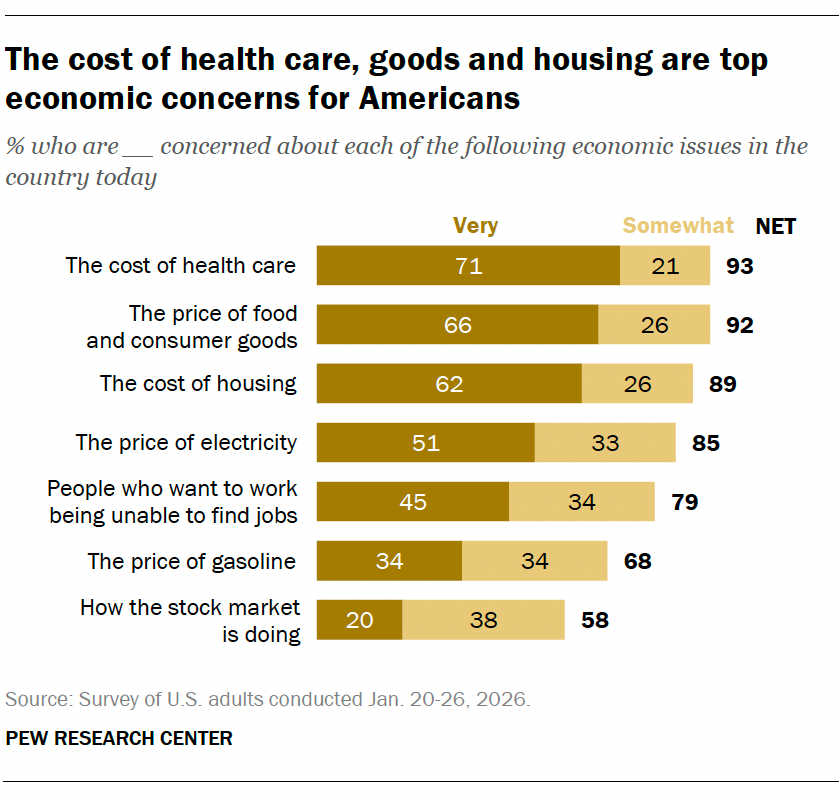
That is a lot of concern packed into a small paragraph! Whether you are a “soccer mom” or a “dual-income no-kids family” (DINK), many Americans are feeling the same financial pinch. Let’s look at the big picture and then narrow it down to some of your specific areas of pain.
Widespread Economic Concerns
Most Americans have negative views of the U.S. economy right now. According to Pew Research, “About three-in-ten U.S. adults (28%) rate economic conditions in the country as excellent or good, while roughly seven-in-ten (72%) rate them as only fair or poor.”
Experts Agree
Sarah Foster at Bankrate says, “The massive post-pandemic price burst hasn’t just challenged consumers’ ability to afford the items they want and need. It’s also damaged their personal finances, making it harder for consumers to take the prudent financial steps that could set them up for success in the long run… Those steps include saving for emergencies, investing in retirement, and covering expenses without incurring credit card debt.”
Taryn Phaneuf at Nerdwallet writes, “No single factor can explain why food is so much more expensive now than before the pandemic. Food prices—which are up 34.6% since 2019—remain high because of the combined impact of rising input costs, supply chain disruptions, and corporate profits.”

Little Decisions Can Lead to Big Relief
Sports
I have a friend who is the father of six children. He and his wife made a decision to simplify their lives and ease the cost of youth sports. Their rule was that if the child wanted to be in sports, the only sport they could do was running because it was the least expensive, it was good for them, and they could practice it anywhere. All of them turned out to be capable runners. Consider a similar narrowing of sports options to protect your time and expense. Furthermore, ride sharing with other moms can help ease your costs and nerves.
Health Care
Look into health care co-ops. Many people are moving to this lower-cost alternative to health insurance. Practice preventive medicine by monitoring your children’s diet with healthy options instead of fast food.
Groceries
It is wise to purchase in bulk to capture available discounts. Check into:
Housing
While I understand you may be cramped in a smaller home, find joy and contentment where you are now. Stress increases when we live in the future. We know young couples who rent to enjoy low maintenance and flexibility, while others are looking at smaller homes to avoid the high costs associated with a bigger one.
Steps to Avoid Being Overwhelmed
Be optimistic and grateful. Invite the children and like-minded friends to participate so you can encourage one another. Limit time with those who are big spenders. Here are some other ideas:
Got Debt?
Credit card bills that are not paid off monthly are harming the financial state of many American families. Aim to pay off the one costing you the most in interest first. Apply any extra income (raises, tax refunds, gifts, etc.), savings from cooking at home, and reduced expenses (like a low utility bill) to that debt. When that one is paid off, direct the money toward other interest-bearing debt, and put some toward building your emergency fund.
Set specific goals, and eventually build short- and long-term savings. Plan ahead for future needs: car and home repairs and maintenance, school supplies and uniforms, etc.
Study your bills to gain insight into how to reduce them. For example, what grocery or household purchases are more inflated than others? Try doing without, finding substitutions, or making your own, like salad dressing, bread, and cleaning supplies. Research options online.
Use “Taxi” Time Wisely
Keep It in Perspective
In November 2008, Zimbabwe experienced the second-highest recorded inflation rate in history. It reached a peak of 89.7 sextillion (10²¹) percent.
Not long ago, I was attending an economic forum where a panel of Americans discussed their concerns over “double-digit” inflation, as if it were unbearable. During the exchange, a few Zimbabweans offered consultation by explaining how they survived the second-worst hyperinflation ever recorded. They watched their money become worthless; yet they found joy in the midst of a financial meltdown. God brought them through the crisis, and many look back on their losses as a blessing in disguise, as their priorities dramatically shifted toward appreciating all the things that money cannot buy.
Consider posting a card or note in a prominent place in your home that expresses your gratitude for all the small things that bring you joy each day. Counting your blessings will have a positive impact on you and your family.
Additional Resources
Crown has many biblically based, practical, and empowering courses and studies that can help you find freedom with your finances. Learn how to be a faithful financial steward of the resources God provides.
This article was originally published in The Christian Post on April 10, 2026.
Dear Chuck,
Is there such a thing as depression brought on by financial stress? We have reached midlife and have very little to show for it. It seems we had money but not enough common sense to set some aside for our retirement years, which are quickly approaching.
Depressed About Our Finances
Dear Depressed About Our Finances,
I am sorry that you are experiencing depression; your comments remind me of what Christ taught us: “Life does not consist in the abundance of possessions” (Luke 12:15 NIV). Your finances should not determine your worth, happiness, or meaning and purpose in life.
Have you ever made a list of the things that have brought joy to your life that money cannot buy? It is a great exercise to fight off the grip of depression. The list could include friendships, shared experiences, love, children, church, and the things you have done to serve God and others. This will help you see the truth that your true riches in life do not come from money and possessions.
Change Is Possible
It is true that the use of money and resources early in life strongly impacts one’s future. The reality of past spending and lack of preparation can cause deep guilt and fear.
According to an article at Mental Health Hotline, the toll of financial stress has been linked to the following:
Thankfully, those actions or past mistakes do not have to be final. The financial, emotional, and relational challenges are real, but it is never too late to change course. In fact, midlife can be the most powerful season for transformation because your motivation is stronger, your awareness is higher, and your understanding of what habits need to change is clear. Comparing your life to others may only add to the financial stress. The strain can lead to hopelessness if relief is not in sight.
“Therefore do not be anxious about tomorrow, for tomorrow will be anxious for itself.
Sufficient for the day is its own trouble.”
(Matthew 6:34 ESV)

Take Agency—Plan for a Better FutureSome simple steps can set you on a path to find hope:
Money Doesn’t Last—Eternal Riches Do
What we accumulate on earth can be lost, stolen, or devalued. It will ultimately all be left behind. No matter how big or how small your net worth is, you won’t be taking it with you. We come into the world naked and leave the same way. Remember, a naked person has no pockets.
Earthly wealth will provide temporary comfort and hope for provision later in life. But eternal riches will grant you lasting peace and reward. Choose to live with an eternal perspective. You will find that stewarding what God gives you has a whole new meaning and purpose.
Take this time in your lives to surrender everything to Him. Then ask Him to give you the wisdom, discipline, and desire to live as His financial manager. He is faithful, merciful, and abounding in steadfast love and kindness. Refuse to listen to the attacks of your accuser—even if you have setbacks. Stay the course, and remain faithful to Him.
One day, you can look forward to hearing, “Well done, good and faithful servant. You have been faithful over a little; I will set you over much. Enter into the joy of your master” (Matthew 25:21 ESV).
“Do not lay up for yourselves treasures on earth, where moth and rust destroy and where thieves break in and steal, but lay up for yourselves treasures in heaven, where neither moth nor rust destroys and where thieves do not break in and steal. For where your treasure is, there your heart will be also.
(Matthew 6:19–21 ESV)
Financial stress isn’t just a numbers issue; it’s a trust issue. Inviting God into our decisions replaces fear, guilt, and anxiety with His peace that passes all understanding.
Additional Resources
If credit card debt is adding to your stress, consider reaching out to Christian Credit Counselors. They are a trusted partner of Crown and are able to help consolidate debt and get one on the road to financial freedom.
This article was originally published on The Christian Post on April 3, 2026.
