
Dear Chuck,
Is America heading towards an economic collapse? If so, how do I prepare?
Worried Boomer
Dear Worried Boomer,
My view is we are headed towards another economic crisis with a low risk of an actual economic and/or currency collapse. In either scenario, there are ways to be prepared.
Economic Crisis vs. Collapse
An economic crisis is different from a collapse. America has worked through several in my lifetime: ‘70s stagflation, ‘81 recession, ‘89 savings and loan crisis, post-9/11 recession, ‘08 great financial crisis, and the 2020 coronavirus crisis we are in now. A collapse is brought on by a complex set of factors that must merge simultaneously but at its very core is a devastating interruption in economic output and/or a loss of confidence in a currency.
In an article for Investopedia, Sean Ross explains, “The root of any collapse stems from a lack of faith in the stability or usefulness of money to serve as an effective store of value or medium of exchange. As soon as users stop believing that a currency is useful, that currency is in trouble.”
The advantage America has is that no other nation has the vast diversification of economic output nor presents a viable alternative to the stability of the U.S. dollar….yet.
The two warning signs of a possible collapse are (1) high unemployment and (2) runaway inflation. Essentially, this is when there are not enough jobs for the economy to grow and too much worthless money being pumped into the economy.
Reasons the Dollar Could Collapse

What Would Happen?
Panic would ensue because it would happen quickly. Demand for the dollar would drop dramatically along with U.S. Treasuries. Interest rates would increase. Hyperinflation would occur as investors would turn to other currencies. The dollar would decrease in value and prices would jump.
A collapse would be cataclysmic in the damage and disruption it would cause to not only our lives but to the rest of the world. Imagine how your life might be affected if banks and ATMs suddenly closed, you had no access to credit, there were limited supplies of groceries, gasoline, and other essentials, paired with an increase in civil unrest and crime. These scenarios would impact the postal service, transportation, education, health care, etc. Survival in this kind of environment for any length of time would be difficult.
We have many contemporary examples to learn from with varying degrees of damage: Germany, Argentina, Iceland, and Zimbabwe have all suffered a currency collapse. Of course, none of those nations have the size and stature of the U.S. dollar so a similar event in this country seems unimaginable, but it is not impossible.
How to Prepare?
Solomon commented on this back in ancient times. In Ecclesiastes 11:2 he advises us to diversify into seven or eight differing assets while in Ecclesiastes 11:6 we are advised to have multiple sources of income.
Ask yourself if your career provides an essential service. If not, consider changing or getting certified in areas that would give you greater job security. This is important to remember when preparing your children for their future.
The Bible warns us repeatedly to avoid enslavement and compares debt to being like a slave. You can weather a crisis or a collapse with less stress and greater flexibility without debt.
Gold and Bitcoin represent an alternative to the U.S. dollar. When fear or volatility begins to rise, the price of these alternatives also rises. But these are not the only options to hedge against a crisis or collapse. Real estate, equipment, commodities, and precious metals are also favorable investments during a time of turbulence. There is not one single option that will always protect you; that is why diversification is essential.
Seat Belts, Not Parachutes
Brad McMillan at Forbes believes doomsayers are coming out of the woodwork. He says, “Volatility in a currency’s value does not mean the currency will collapse any more than a drop in Amazon’s share price means the company is going away.” In July, he said we would see a collapse coming long before it happens but did not believe it was coming soon.
I want the body of Christ to be prepared if and when a crisis/collapse occurs. In my new book, 7 Gray Swans, Trends that Threaten Our Financial Future, I discuss the economic trends that concern me and the present challenges we face such as Universal Basic Income, Modern Monetary Theory, and a cashless society, among others.
Taking precautions now is like wearing a seatbelt in a fast-moving car or airplane. It makes sense. However, I do not believe it is time to look for the parachute!
This article was originally published on The Christian Post on January 15, 2021
Dear Chuck,
I did not grow up in a home that gave generously. My wife did. She (and the Lord) are convincing me to make it a priority. Can you help me get a better understanding?
Holding On for Retirement
Dear Holding On,
Well, you sure sound a lot like me about 20 years ago! I happily donated 2.6% of our gross annual income each year and I was content with that. That was the national average at the time, by the way. When my wife pleaded with me to give more, I had lots of ready rebuttals to prevent it from happening. So let me say up front, I was wrong, and my, how God has wonderfully transformed my heart on this topic!
Giving has become a deep source of joy for us. Now, it is even our tradition, as a couple, to spend a few hours the last week of December to total our giving for the year and seek ways to give more. We try to surpass what we gave the previous year. My only regret is that it took several decades for us to get to this point. I hope you don’t make the same mistake I did.
The Surprise Gifts
One Christmas, Ann and I were broke and unable to buy our two young boys the Christmas presents we really wanted to give them. I remember feeling frustrated and depressed about it.
Meanwhile, God moved in the heart of another family of modest means that we knew at church to bless us. But not just any family. Earlier that year, the oldest of their two sons was tragically killed in a freak accident on the day of his high school graduation. He had a bright and promising career ahead of him both as a student and an athlete. His parents were devastated by the loss. Little did we know that the money they had saved for their son’s Christmas gifts would instead go to supply for our two sons. We will never forget our shock and the love we felt for them through those gifts for our boys. We were so grateful to have presents under the tree but it was their unexpected generosity that ended up being the greater gift to us. They set a beautiful example of granting hope to others through giving. Since that time, we have had opportunities to give that have stretched us and blessed others in ways we could never have imagined.
We Are All Generous
Todd Peterson, a friend and former NFL kicker, came up with my favorite quote about generosity. He said, “We are all generous…Nobody has to teach us anything about being generous. The challenge we face and the choice we must make is, are we going to only be generous towards ourselves or are we going to be generous towards God?”
It’s a matter of breaking the habit of self-generosity. A lifestyle of giving makes you think before you buy something. You have to consider whether you really need it while others are truly in need. God wants us to direct that generosity towards Him, to be “rich toward God” instead of ourselves, so we will share what He has provided for us.
Our founder, Larry Burkett, once said, “My greatest fear in life is standing before the Lord and hearing Him say, ‘I had so much more for you, but you held on too tightly.’”
When we choose to obediently follow biblical financial principles, giving becomes our highest priority. Oftentimes, God supplies our needs in unexpected ways, allowing us to give more generously. Eliminating debt frees up funds to share with others. When we give with no expectation of anything in return, we are the ones rewarded.

Benefits of Giving
Barriers to Giving Generously
FidelityCharitable.org suggests ways that charitable giving can help with tax planning.
Ask the Lord to Open Your Eyes
Besides supporting your church and organizations dedicated to building the kingdom, make it a goal to serve together as a family to help others in 2021. There are needs everywhere. People are hurting and often too embarrassed to admit it. Your attention encourages and grants hope to the receiver. We became aware of that fact in our very own neighborhood. Couples have pulled together to help a precious soul who was hurting so badly she couldn’t even help herself.
The Apostle Paul told the Ephesians, “In all things I have shown you that by working hard in this way we must help the weak and remember the words of the Lord Jesus, how he himself said, ‘It is more blessed to give than to receive’” (Acts 20:35 ESV). I now know this for a fact!
Don’t worry about your retirement; rather focus on that day that you will stand before the Lord and be evaluated for your stewardship. I agree with your wife; make giving a top priority and you will never regret it.
This article originally published on The Christian Post on January 8, 2020
Dear Chuck,
My husband and I really need this to be the year for a financial turnaround. What are the best practical steps we can take to achieve this in the new year?
PTL it is 2021!
Dear PTL it is 2021,
Happy New Year! We join you in thanking God for another year! It is a time to start fresh and pursue our God-given purpose. Improving your finances is a fantastic goal for any couple and I have practical advice to help you.
“Unless a particular man made New Year resolutions, he would make no resolutions. Unless a man starts afresh about things, he will certainly do nothing effective.”
– G.K. Chesterton
The last sentence is so true. Nothing effective is accomplished unless we purpose to achieve something new!
If you and your husband sincerely want to make financial progress and are willing to commit to a plan, here is the most simple and sure way to do it: Give first. Save second. Say it to yourself, write it on post-it-notes, shout it out loud, make it your mantra for 2021, and put it into practice starting today!
Give First
“Honor the Lord with your wealth and with the first fruits of all your produce.” (Proverbs 3:9 ESV)
Step 1: Give a portion of everything that you receive. Make it your absolute first priority and do not compromise.
God wants to conform us into His image. He does that by asking us to trust Him enough to give away a portion of all that He provides. He wants us to simply let go of it. When we acknowledge that He is our Provider, we honor Him by giving first. We do not honor Him when we donate from what we have leftover at the end of the month.
It is vital that we learn to be generous with others to avoid the dangers of trusting in our possessions, our assets, or our net worth. As we advance God’s kingdom by practical means, we experience true riches through giving.
As you begin the year, resolve to honor the Lord by the way you handle money. Giving is not mandated by God. He asks us to give so He can pour out his blessings on us and others (Malachi 3:10). Generous living is one of the greatest blessings of financial freedom. When it comes from a heart of love and gratitude, not an obligatory attitude, it can change you. Plus, giving multiplies in value here and on into eternity. Paul wrote an entire apologetic for the benefits of giving in 2 Corinthians 9:6-12. Be sure and meditate on it.
Believing He loves us and knows what is best for us, we can trust Him even when giving just makes no earthly sense. We give first because He asked us to do so. And when He increases our income, He wants us to increase our standard of giving, not our standard of living.
When confronted with this practice, I told my wife that it would be necessary for us to change everything in the way we managed our budget. She said, “Exactly!”
Giving first does require an adjustment to your budget so you’re prepared to give on a regular basis. Once you develop the habit, it will become something you look forward to doing.
Start by tithing to your church. It is not a law or a tax but a great principle to apply for a beginning goal. Once this is in place, continue to seek His will and direction to grow more and more generous.

Save Second
“Go to the ant, O sluggard; consider her ways, and be wise. Without having any chief, officer, or ruler, she prepares her bread in the summer and gathers her food in harvest.” (Proverbs 6:6-8 ESV)
Step 2: Save a portion of everything that you receive. Make it your absolute second priority and do not compromise.
When it comes to saving money, consistency is key. That can be achieved by living below your means which requires contentment.
Contentment motivates us to enjoy frugality. We gratefully drive used cars, live in smaller homes, and ignore the newest fads. It gives us flexibility and margin in our budget so we can give generously first and save second as our most important priorities.
To get started right in 2021, make your first savings goal to set aside $1000 in an emergency fund. Then work on setting aside a full three months of living expenses. This money should be in an accessible savings account in the event of an emergency. You may want to increase this fund to six months of your living expenses but that can happen in 2022. For now, achieve this initial savings threshold and you will be on your way to a new habit that will completely change your finances for the better. Crown has excellent online courses to help guide you on this journey.
Whether you can save a little or a lot, your confidence must rest in the Lord. He will never leave you or forsake you. Money will.
“Keep your life free from love of money, and be content with what you have, for he has said, ‘I will never leave you nor forsake you.’” (Hebrews 13:5 ESV)
Stay Focused
Start this year with hope and anticipation of what you can accomplish in the strength of the Lord. Most people abandon their New Year resolutions by mid-February! Take it a day at a time and realize that the benefits will last beyond a lifetime–they will ripple into eternity!
“Delight yourself in the Lord and He will give you the desires of your heart.” (Psalm 37:4 ESV)
Praise the Lord, it is 2021!
This article was originally published on The Christian Post on January 1, 2021
Researchers at Statista.com estimate that consumers in the United States are projected to have spent an average of $850 on Christmas gifts this year. That is similar to what was spent in 2019.
While we may fuss that this holy season has become all about materialism or consumer-driven hyper-indulgence, much is to be appreciated about the incredible outpouring of love, gratitude, and generosity that is shown to family members, friends, employers, employees, and even strangers because of this miraculous birth of the Christ-child in a crude, Middle Eastern manger. What started with gold, frankincense, and myrrh to honor this very special newborn babe has exponentially rippled into a massive economic surge the world over. The biggest birthday party in the world is still cause for celebration and the giving of gifts more than 2,000 years later. Yet, it is not what we give on Christmas that matters the most.
Famed scholar and author C. S. Lewis said, “The Son of God became a man to enable men to become sons of God.” That, dear Christian, is the most glorious gift of Christmas!
Today we celebrate Christ’s birth, planned before the creation of the world. As you go about your day, ponder these life-changing truths from Scripture:
Christmas Prepares the Way for Our Redemption
“For God so loved the world, that he gave his only Son, that whoever believes in him should not perish, but have eternal life. For God did not send his Son into the world to condemn the world, but in order that the world might be saved through him.” (John 3:16-17 NIV)
“For the wages of sin is death, but the free gift of God is eternal life in Christ Jesus our Lord.” (Romans 6:23 ESV)
Christmas Prepares the Way for Our Adoption
“… When the fullness of time had come, God sent forth his Son, born of woman, born under the law, to redeem those who were under the law, so that we might receive adoption as sons.” (Galatians 4:4-5 ESV)
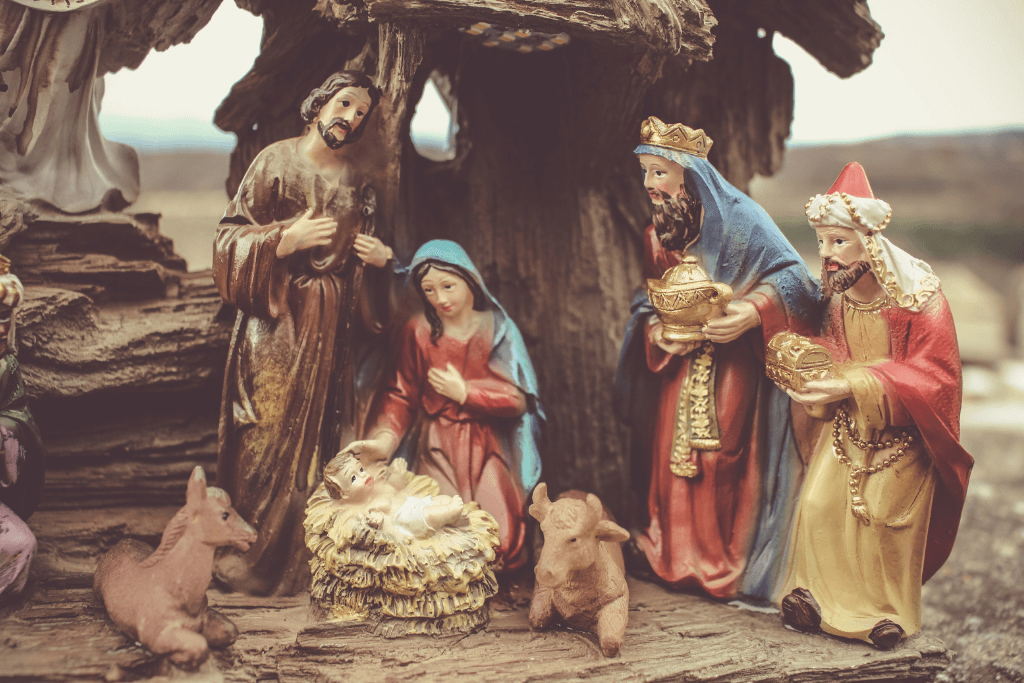 Christmas Revealed God’s Greatest Gift to the World
“But God, being rich in mercy, because of the great love with which he loved us, even when we were dead in our trespasses, made us alive together with Christ—by grace you have been saved— and raised us up with him and seated us with him in the heavenly places in Christ Jesus, so that in the coming ages he might show the immeasurable riches of his grace in kindness toward us in Christ Jesus. For by grace you have been saved through faith. And this is not your own doing; it is the gift of God, not a result of works, so that no one may boast.” (Ephesians 2:4-9 ESV)
That gift will change your life – both now and for eternity! Receive it, believe it, and glorify God with all He’s so lavishly given to you and me.
I, Chuck Bentley, together with my wife Ann, who assists me with writing and researching this weekly column, and all of us at Crown Financial Ministries, wish you a very Merry Christmas!
This article was originally published on The Christian Post on December 25, 2020.
Dear Chuck,
Covid set me back financially this year. As a result, we’re having a very frugal Christmas. Can you offer any tips on setting financial goals for next year? I want to be better prepared for what may lie ahead!
Getting Ready for 2021
Dear Getting Ready,
I am so sorry for the setbacks you have suffered during this pandemic. Millions of people just like you are looking forward to the new year with great anticipation and are hoping to make improvements in our finances.
New Year, New You
January is typically a time of renewal. For many of us, that includes diets, health and fitness goals, relationships, or financial plans. However, after what we have experienced in 2020, our highest need will be for renewed hope. Watching the news, scrolling through social media, and listening to certain friends or family members will not fulfill that need. Hope gets us through the tough seasons and gives us direction in times of uncertainty. Thankfully, we have the ultimate source of hope: Jesus. We need to learn to rely on Him in order to cultivate that hope. Here is a quick outline of steps for 2021.
Step One: Make a Vow. Dedicate this year to the Lord and seek his guidance in all decision-making.
“Commit your work to the Lord, and your plans will be established.” (Proverbs 16:3 ESV)
Step Two: Make a Plan. Plan and encourage one another daily.
“Two are better than one, because they have a good reward for their toil.” (Ecclesiastes 4:9 ESV)
Pray for self-control and the willingness to stay focused throughout the coming year.
“But the fruit of the Spirit is love, joy, peace, patience, kindness, goodness, faithfulness, gentleness, self-control; against such things there is no law.” (Galatians 5:22-23 ESV)
Step Three: Make a Target. Defining your financial goals gives you something to aim for.

Step Four: Make a Budget. Gather your financial records, track your expenses, and create a budget. Make giving your first priority. Establish an emergency account. This will enable you to cover unexpected expenses so that you can avoid debt. Start with $1,000 and then aim for an amount that covers 3-6 months of your overhead expenses. Analyze lifestyle decisions. Some short-term ones to consider include replacing a vehicle, repairs, maintenance, vacation, gifts, etc. Long-term decisions may include a down payment for a home, education, retirement, etc. Keep your tax liability in mind and plan accordingly.
Step Five: Review Your Insurance. This is a good time to review your insurance coverage: Homeowners or Renters/Auto/Liability, Disability, Life, and Long-Term Care. Not only should you determine if you have coverage but also if you are getting the right price for what you have in place.
Don’t Overlook These
Update your will. Today this includes creating a Living Will or Trust, Health Declarations, Power of Attorney documents, and password files.
Pick a debt management plan and pay off all credit cards! Christian Credit Counselors are trusted partners of Crown and have helped hundreds of thousands of families eliminate their credit card debt. Once free of consumer debt, you can begin investing.
Depending on your age, put a reminder on your calendar to enroll in Medicare before your 65th birthday. Determine when you should begin to draw social security.
Check your credit reports from Equifax, TransUnion, and Experian. This is important with the number of security breaches. Check to make sure information is correct and report any inaccuracies. Contact them to freeze your credit if necessary. This will prevent thieves from applying and obtaining credit in your name. You can unfreeze as needed.
Know your credit score. A free report is available at www.annualcreditreport.com. Some credit cards update your FICO score for free each month.
Calculate your net worth (assets minus liabilities). Aim for a positive number!
Get Wisdom!
There has never been an easier time to attain a Biblical financial education. Books, online studies, and insights from places like Sound Mind Investing, Generous Giving, and Crown’s online library of courses make it convenient and practical to learn year-round.
Most importantly, read the Word of God. You will gain wisdom, discernment, and hope that is more advantageous than anything the world offers.
God has called us to himself that we might shine light into the darkness and bring Him glory. At Crown, we provide resources that will renew your hope through Biblical truths about the Father and the gifts He has entrusted to you.
Merry Frugal Christmas
It has been our experience that a frugal Christmas is often the best Christmas. The focus shifts away from the number of boxes under the tree or the expense of the season to the awe and wonder of celebrating the incarnation of Christ; Emmanuel, God with us.
I wish you and yours a very Merry Christmas and a blessed New Year. We are here to help you on your journey in 2021.
The Article was originally published on The Christian Post on December 18, 2020
Dear Chuck,
I get tired of hearing how celebrity athletes flaunt their wealth and waste ridiculous amounts of money on frivolous “stuff.” Didn’t Larry have an outreach to professional athletes?
Tired of NFL, MLB, and NBA
Dear Tired Fan,
You are correct; Larry Burkett, Crown’s late founder, often advised professional athletes or spoke at events hosted by team chaplains. While we often read about the big salaries and over-the-top lifestyles, that is only one dimension of the story.
One of the factors we often forget is just how short the careers are for professional athletes. The Bleacher Report says that the average career in football is 3.5 years, basketball is 4.8 years, and baseball is only 5.6 years. Some of them spend years sacrificing while attempting to qualify for a spot in pro sports. Further, it is not uncommon to see the sudden wealth of athletes evaporate through bankruptcy, poor investments, mismanagement, or drug and alcohol abuse once their career is over.
We need to have greater sympathy for those who are in high-risk careers during and after their short run in sports. We also need to remember that each person has an individual choice in how they manage wealth, and there are some great exceptions to those you describe.
There Are Exceptions
Although not impacted by this ministry, as far as we know, there is an athlete who is doing it differently and who may impact your perspective of those who get paid well for their athletic skills. I looked deeper into the story of a very good steward whom you have probably heard of.
A Miracle Baby
35 years ago, the Tebows were working as missionaries in the Philippines. While there, Pam suffered complications with her pregnancy. A doctor recommended an abortion in order to save her life. Instead, she and her husband trusted God and delivered “a miracle baby.” They asked for prayers that their sickly baby would become big and strong. Little did they know that one day he would become a Heisman Trophy winner and professional NFL/MLB player who attempts to honor God in his endeavors.
Tim Tebow was interviewed by MarketWatch. This is where I learned some encouraging things about his financial philosophy and practices.
Tim’s Financial Advice
First, tithe. Second, be involved in things that make you money when you aren’t present. Things that will earn you a return while you sleep, are with your family, or are playing ball. Listen to people who have financial wisdom in areas that you do not. Tim knows his strengths and weaknesses. He says, “I try to fill my life up with people that are really good in certain areas because I think it’s important to be a good steward of your money and your resources. Money gives us the ability to bless and to help. It’s not just having it, it’s how you use it.”
He wants to put money away and live on a portion of it. Making memories is important to him, so planning is crucial. If you don’t make an effort to invest in your family, time can pass you by. He says that making special things happen is worth more than new shoes or clothes.
The Tim Tebow Foundation gives money to projects important to him: special needs ministries, orphan care and prevention, helping children with profound medical needs, and fighting against human trafficking. He strongly believes in helping those who cannot help themselves.

Photo by Tim Tebow Foundation on Unsplash
Tim’s Way to Keep Perspective
Tim starts and finishes each day with prayer. His favorite possession is the Bible he has owned since he was a child. He no longer takes it with him everywhere, but there was a time in his life when he did. It reminds me of Paul’s letter to young Timothy in 2 Timothy 3:14–17 (ESV):
But as for you, continue in what you have learned and have firmly believed, knowing from whom you learned it and how from childhood you have been acquainted with the sacred writings, which are able to make you wise for salvation through faith in Christ Jesus. All Scripture is breathed out by God and profitable for teaching, for reproof, for correction, and for training in righteousness, that the man of God may be complete, equipped for every good work.
In a blog post, Tim wrote that his life changed when he shifted focus from himself to things that really matter. Society stresses fame, fortune, and power, but abundant life is not found in that arena. He defines success as “the difference you can make in someone else’s life.”
He contrasts earthly success with eternal significance in another post:
When we succeed, we get to earn more, move up, take vacations, and reap the fruits of our efforts, but when we strive for eternal significance, we become compelled to share and give back. When we succeed, we impact our individual lives, but when we are significant, we impact others. To transcend business success into eternal significance, you have to take your gifts, find a need and meet it. Achieving significance means we go beyond gaining financial comfort and we strive to serve others.
Lessons for Us All
Tim’s life reminds me of the passage in Luke 16, beginning in verse 10: “One who is faithful in a very little is also faithful in much…” I am encouraged that Tim and other believers who hold positions of influence honor God with their finances and steward all that they have wisely for His glory. May they boldly proclaim the gospel and winsomely defend it.
Each of us is given unique talents, abilities, and resources to steward as well. God wants us to reflect His light upon this dark world. Let us follow Tim’s example! Join me in praying for the protection and faithfulness of those God has put into professional sports.
This article was originally published on The Christian Post on December 11, 2020
Dear Chuck,
My husband told me we need to discuss our family finances. I asked him if we could wait until after the holidays. He agreed to but I’m a nervous wreck. What should I do to prepare?
Nervous about Our Finances
Dear Nervous about Our Finances,
The fact that your husband wants to discuss your finances does not necessarily mean that something is wrong. It could be a very positive step in the right direction! He may just want to open the dialogue so you two can get on the same page and work towards some common goals. Prepare your heart, encourage his leadership, and welcome his desire to talk.
Some Possible Scenarios
There are several reasons that spouses get nervous when it comes to discussing finances. Painful memories from childhood or later on may reveal insecurities. The fear of changing one’s lifestyle can uncover misplaced dependencies. There’s a fear of shame that accompanies bad investment decisions or the loss of income. Financial infidelity may be discovered and trust may be threatened. He may need to talk to you about his job or a potential layoff.
Is debt an issue in your marriage? A survey conducted by Fidelity Investments found that couples concerned with debt argued significantly more than those without debt concerns. They also found that they have difficulty having conversations about budget/spending, managing debt, saving, and investing for the future.
The truth is, marriages function better when there are no secrets. Financial decisions need to be shared and discussed with honor and trust. If mistakes have been made, this is the time to confess, repent, and forgive. Regardless of what is revealed, we can trust the Lord because of His promise: “And we know that for those who love God all things work together for good, for those who are called according to his purpose.” (Romans 8:28 ESV)

Build Trust
46% of those surveyed at Wallet Hub said they’d leave a relationship if their partner spent money foolishly. Half wouldn’t marry someone with bad credit, and a majority said financial infidelity might be worse than actual cheating. This reveals the impact money has on couples.
Financial issues can signal a lack of self-discipline, drug or gambling addictions, or unmet emotional needs. If your marriage is under a great deal of financial stress right now, taking the time to sit down with your spouse and talk about any deeper issues could be the best thing that could happen.
Ask the Lord to prepare your heart by removing any fear or anger. Then set aside a time and place, free of distractions, so you and your spouse can focus on your situation.
Ways to Prepare
Solomon said, “Wisdom, like an inheritance, is a good thing…it preserves those who have it” (Ecclesiastes 7:11). Ask the Lord for wisdom with your finances. Seek to preserve or find unity.
Topics to Discuss and Act Upon
You can get through this together. Many couples are helped by scheduling regular money dates to better understand and apply Biblical financial principles. Crown’s online courses are a convenient way to start growing a similar financial mindset. You might also benefit from working with a believing mentor or couple. Ask your pastor for recommendations or consider wise people you know.
For an in-depth understanding of money and marriage, get a copy of my book, Money Problems Marriage Solutions. Here are 7 steps that helped me and my wife get unified and that I believe are critical to assist any couple to make financial progress:
Don’t let this ruin your Christmas. Blessings to you and your family. Let us know how it goes!
This article was originally published on The Christian Post on December 4, 2020.
Dear Chuck,
My husband and I just relocated and want to start a business in which he has years of experience. He left a company that lacked integrity and was losing clients. We have money but don’t know many people here yet. Any suggestions before we step out?
Pensive Entrepreneurs
Dear Pensive Entrepreneurs,
It would help to know what kind of business you want to start. It sounds like it may be dependent upon your network to be able to grow and your concern is that your capability is high, but prospects are low. Just guessing.
Relational Capital
Far too often people measure their business plan only by how much financial capital they have. If they have lots of money they may become overconfident. If money runs low, stress and vulnerability increase. This narrow focus omits a form of capital that is of equal or greater value: relational capital. More often than not, it is your relationships with others that can make or break your business.
Let’s review some principles around this that you can hopefully apply to your plans.
Business
Your husband can give thanks for lessons learned and build a business grounded in the knowledge he gained. Evaluate your relational capital in three areas: staff, clients, and suppliers.
A company’s culture is built on the way it values people. This requires investing time, expressing appreciation, communicating details effectively, and setting realistic goals and deadlines. Always treat others with courtesy, compassion, and integrity to build trust. Relationships within a company create a team that respects and enjoys working together. Employee retention rises with job satisfaction which is impacted by positive morale and productivity.
Can you attract good staff to your company in the new location? Give this a “Red Light/Green Light” evaluation.
Good client relationships build loyalty. This can lead to referrals and word-of-mouth recommendations which grow sales and provide more jobs. Do you have good potential clients in your new location? Give this a “Red Light/Green Light” evaluation.
Positive relationships among suppliers are valuable too, especially if you ever need their help. A good reputation can even put you in good standing with competitors. Not all locations are conducive to have good supplier relationships. Give this a “Red Light/Green Light” evaluation.
I would not launch the new business until all three of the essential aspects of these relationships were “Green Lights” depending upon the type of business you plan to start.

What does God say about the importance of relationships?
The Bible instructs us in the way we should treat those with whom we have relationships. I am including only a few verses.
“Put on then, as God’s chosen ones, holy and beloved, compassionate hearts, kindness, humility, meekness, and patience, bearing with one another and, if one has a complaint against another, forgiving each other; as the Lord has forgiven you, so you also must forgive. And above all these put on love, which binds everything together in perfect harmony.” (Colossians 3:12-14 ESV)
“Repay no one evil for evil, but give thought to do what is honorable in the sight of all. If possible, so far as it depends on you, live peaceably with all.” (Romans 12:17-18 ESV)
Where to Develop Relationships
Church is a great place to meet like-minded people. As you are able, plug into the church, volunteer to serve, and take an active role in classes, trips, fellowships, or small groups.
Professional organizations related to your career offer community and relational capital opportunities. Not only are they a place to be served but also a place in which you can serve and help others. They can be a source of guidance, accountability, growth, and encouragement.
Your neighborhood is a great place to plug in. Offer to serve on your homeowner’s association (HOA) and be attentive to the needs around you. Reach out to the lonely, the elderly, the single, or the overworked parents. You will quickly grow relationships as you get involved and possibly make lifelong friends.
Author Gary Chapman says, “Love is the fundamental building block of all human relationships. It will greatly impact our values and morals. Love is the important ingredient in one’s search for meaning.” By showing love to your staff, clients, and suppliers, not only will your business grow, but you will have a much happier and fulfilled life as well.
Let me know if you decide to launch the company. Remember, financial capital is important but has a limited value. Relational capital is priceless.
This article was originally published by The Christian Post on November 20, 2020.
Dear Chuck,
Is it a sin to be in debt? I feel guilty for having debt.
Not Debt Free
Dear Not Debt Free,
No, there is not a law or command in the Bible to be out of debt, but it is a good principle to live by.
Like you, most Christians probably know that it is best to live debt-free. The belief has been so popularized that it may overshadow more important Biblical financial principles. Having studied this topic for the past 20 years, it is my opinion that getting out of debt should not be a believer’s primary or ultimate goal.
While it is important to pay off your debt, I believe there are three areas of greater significance that should concern us regarding stewardship.
Get Out of Claiming Ownership
The Bible makes it very clear that you and I do not own anything; we are God’s stewards. We came into the world naked and will depart in the same condition. This is not simply good theology, but a truth that God wants us to put into practice. If we claim ownership of our money and possessions, we become materialistic and vulnerable to placing our identity in what we have. The weight of trying to accumulate, protect, maintain, and grow our things can control our lives.
Here are three ways to get out of the ownership trap:
Psalm 24:1 (ESV) proclaims, “The earth is the LORD’s and the fullness thereof, the world and those who dwell therein…”
Get Out of Temporal Financial Planning
The vast majority of the personal finance industry, the financial planning industry, and much of the estate planning industry operate ignorant of God’s truth. He commands us to lay up treasures in Heaven and not on Earth.
The parable of the foolish farmer in Luke chapter 12 is a good example. A wealthy entrepreneur struggling to manage his surplus made a short-term financial plan with the goal of taking life easy. Verses 17-21 (ESV) read:
…He thought to himself, “What shall I do, for I have nowhere to store my crops?” And he said, “I will do this: I will tear down my barns and build larger ones, and there I will store all my grain and my goods. And I will say to my soul, ‘Soul, you have ample goods laid up for many years; relax, eat, drink, be merry.’”
But God said to him, “Fool! This night your soul is required of you, and the things you have prepared, whose will they be?” So is the one who lays up treasure for himself and is not rich toward God.
Clearly, planning for our well-being while neglecting God is foolish. Here are three ways to get out of the temporal financial planning trap:
It is good to plan for today and tomorrow, but if we don’t get out of temporal financial planning we will never get into eternal financial planning and be prepared for “that day.”
Get Out of Greed, Coveting, and Selfishness
Greed is wanting more of what you already have.
Coveting is wanting what someone else has.
Selfishness is using what you have exclusively for your own benefit.

We can justify anything that we want or think that we need. Greed drove the foolish farmer to build bigger barns. Ahab coveted Naboth’s vineyard so murder was justified. Nabal’s selfishness temporarily deprived David and his starving soldiers of food.
I know people with a twin-engine plane who are working to get a turboprop so they can travel to their beach house quicker. I know those with a turboprop waiting to get a next level jet, so they never have to fly commercial. I know people with two homes that are looking for a third while ignoring the millions of homeless people in the world. I know people who travel to locations that make jaw-dropping social media picture backdrops but never consider serving the poor who live there.
Three ways to get out of greed, coveting, and selfishness:
Get Your Heart Right
Even if we are debt-free, we can stay trapped in a life of vanity and insignificance until we get out of greed, coveting, and selfishness.
Once you get out of claiming ownership, temporal financial planning, and any financial sins that grip your heart, it would be good to also get out of debt. But don’t simply pay off the bills to feel better about your financial condition. Remember the rich young ruler; he was out of debt, but his heart was not fully surrendered to the Lord.
This article was originally published on The Christian Post on November 13, 2020.
Dear Chuck,
How do you think a Biden presidency would impact my retirement nest egg? It is hard to know which way this election will go! I can’t afford to lose my savings.
Fearful Retiree
Dear Fearful Retiree,
Thanks for the question. As of this writing on November 4th, the day after the presidential election, there is no certain winner. In fact, it looks as if it could be an election that is settled in the courts before it is all over. So, while I will answer your question, it does not assume that Vice President Biden will in fact be elected president.
Short-Term Perspective
I wrote an article earlier this year about the possible worst-case scenario for investors: a contested election. In it, I stated that markets hate uncertainty and if we have a delayed outcome of our election, I expected the markets to tank. I was wrong.
As of right now, the markets are in fact up in the midst of enormous uncertainty regarding the ultimate outcome of the election. There are three possible explanations for this based upon a near equal split of the popular vote: (1) Investors sense that Vice President Biden will be the victor and that massive amounts of stimulus money will be forthcoming. Essentially, they are going long on government bailouts. (2) Investors sense that President Trump will emerge the victor and maintain his pro-business, pro-growth policies that will remove the lockdown restrictions hurting economic growth. (3) Investors believe a Democratic president and Republican senate will present gridlock or provide checks and balances against radical legislation.
No one truly knows which, if any of these options, is driving the optimism in the markets. We can only speculate and better understand with hindsight.
This is good news for the millions of Americans who do not want to see their investments in public stocks and bonds go into a free fall while we wait for this chaos to be sorted out. Hopefully, in the short term, your nest egg will not suffer.
Long-Term Perspective
When considering the economic impact during a full presidential term, I am in the camp of Steve Forbes. Mr. Forbes, editor-in-chief of Forbes Magazine and two-time GOP presidential candidate, predicted on September 4th that a Biden presidency would be “an unmitigated economic disaster.” His dire outlook is based upon the stated platform position to raise taxes on the rich, which will slow economic growth. Mr. Forbes predicted a return to a state of “stagflation,” which is a paradox of inflationary prices but slow or no economic growth to keep up.

A Shift Away from Capitalism
We also know that the Biden/Harris ticket has a strong expectation to implement policies of the Democratic Socialist platform. This includes the Green New Deal, the return of Obamacare taxes, and punitive policy towards the fossil fuel industry in America.
Socialism and/or communism, by definition, are economic philosophies that embrace centralized control of resources with the idea that wealth is redistributed by political leadership not based upon merit or achievement or personal rewards but based upon a government’s definition of what is “fair.”
Sadly, in actual practice, governments often think it is fair to take from political adversaries or those who do not support them to give to their own constituencies or even to keep the resources for themselves. Socialist structures can become a means of coercion that provide a way to take from the producers and give to the non-producers. And usually, those whose resources are taken are first attacked, denounced, and defamed as unworthy and flawed.
The Bible is clear that we must work as unto the Lord if we are able, and with the rewards we earn, be generous toward those who are less fortunate. A socialistic structure turns that on its head. Those who work and achieve can be deemed unworthy; those who contribute nothing can be rewarded for merely being associated with those who have power.
I reached out to my friend and noted economist, Jerry Bowyer, for his help. He noted, “Christians who have fallen prey to socialist ideas tend to fall for the lie that the love of money is to be equated with free-markets. In other words, anyone who prefers free markets is deemed to be implicitly endorsing the love of money. Freedom equals greed. This is a lie, a dangerous one.”
Jerry also added this important insight:
Every system of political economy (which is what we call the study of the proper relationship between the state and the economy) involves money. Capitalist countries have money; socialist countries have money. Both systems have rich people. Both systems have poor people. The difference is that under socialism, it is the politically connected who become rich.
History is replete with examples of how this philosophy ruins economies. We can expect bigger government, more bureaucracy, more federal debt, and slower GDP growth. This will likely be bad for your nest egg long term.
Time to Be Wise
There is valid reason to believe that the fundamental pillars of our nation would be altered during a Biden/Harris term. I do not know how to invest to counteract policies and measures that are yet unknown. I do know that Solomon gave wise advice to investors who were unsure of a looming disaster. He said to diversify:
“Invest in seven ventures, yes, in eight; you do not know
what disaster may come upon the land.” (Ecclesiastes 11:2 NIV)
This is a good time to diversify your investments into asset classes that will perform well regardless of what the future holds. Professional advisors with a kingdom worldview can be beneficial in helping you to achieve this.
An analysis of investing performance also shows that holding steady in a well-diversified portfolio has greater benefits than trying to jump in and out of the market as circumstances change. The yo-yo effect of selling when the market is bad and buying when the market is good causes most investors to buy high and sell low and thus suffer losses.
If you are in your senior years and are concerned about needing funds in the near term, consider moving your retirement funds to very low-risk places like certificates of deposits (CDs), money market accounts, or even cash.
Do not live in fear and anxiety. Regardless of who becomes president, God is in control. He knows your needs and holds your future in His hands.
This article was originally published on The Christian Post on November 6, 2020
